
 By
By Why does ozdikenosis kill you — this question has been circulating widely across blogs, forums, and social media platforms, often framed in alarming and fear-driven language. If you searched this phrase, you’re likely trying to understand whether ozdikenosis is a real disease, why it’s described as fatal, and whether you should be concerned.
This article provides a clear, honest, and SEO-optimized explanation. We’ll explore what ozdikenosis is claimed to be, why people believe it kills, what science actually says, and how health misinformation spreads online. The goal is simple: clarity over confusion, facts over fear.
What Is Ozdikenosis?
Ozdikenosis is a term that appears frequently in online articles describing a mysterious and deadly condition that supposedly leads to organ failure, immune system breakdown, and irreversible damage. However, despite the scientific tone, the term itself raises an important question: is ozdikenosis real?
Origin of the Term “Ozdikenosis”
The word ozdikenosis sounds medical because it follows familiar linguistic patterns:
- “-osis” is commonly used in medical terminology to describe disease processes.
- The prefix sounds complex and clinical, giving an impression of legitimacy.
In reality, this naming structure is often used in pseudo-medical terminology, especially in viral or AI-generated health content. Such terms are designed to sound authoritative, even when no medical basis exists.
Is Ozdikenosis a Recognized Medical Condition?
Here is the crucial fact:
Ozdikenosis is not recognized by any legitimate medical authority.
It does not appear in:
- World Health Organization (WHO) disease classifications
- Centers for Disease Control and Prevention (CDC) databases
- National Institutes of Health (NIH) or PubMed research
- Medical textbooks or peer-reviewed journals
This absence matters. Real diseases require clinical evidence, documented cases, and scientific consensus. Ozdikenosis has none of these.
Why Do People Believe Ozdikenosis Kills You?
If ozdikenosis isn’t real, why are so many people convinced it’s fatal?
The answer lies in psychology, misinformation, and how online content spreads.
Fear-Based Health Searches
When people encounter an unfamiliar medical term, especially one linked to death, the brain defaults to caution. Humans are wired to treat unknown health threats as dangerous, which fuels searches like:
- “why is ozdikenosis deadly”
- “fatal symptoms of ozdikenosis”
- “how does ozdikenosis kill you”
Fear increases engagement, and engagement increases visibility.
Viral Content and Clickbait Headlines
Many articles use emotionally charged phrases such as:
- “The silent killer you’ve never heard of”
- “A mysterious disease doctors won’t talk about”
- “Hidden truth behind ozdikenosis deaths”
These headlines spread rapidly on social platforms, reinforcing the idea that ozdikenosis is a deadly condition, even without evidence.
Scientific-Sounding Language That Feels Real
Content creators often describe ozdikenosis using LSI and NLP medical entities, including:
- multi-organ failure
- cellular energy failure
- mitochondrial dysfunction
- immune system collapse
- metabolic shutdown
To a reader without medical training, these explanations sound credible. Repetition across multiple sites creates false validation.
Claimed Reasons Why Ozdikenosis “Kills You” (Unverified Theories)
To fully answer the search intent behind why does ozdikenosis kill you, we must examine the claims commonly made online — while clearly labeling them as unverified.
Multi-Organ Failure
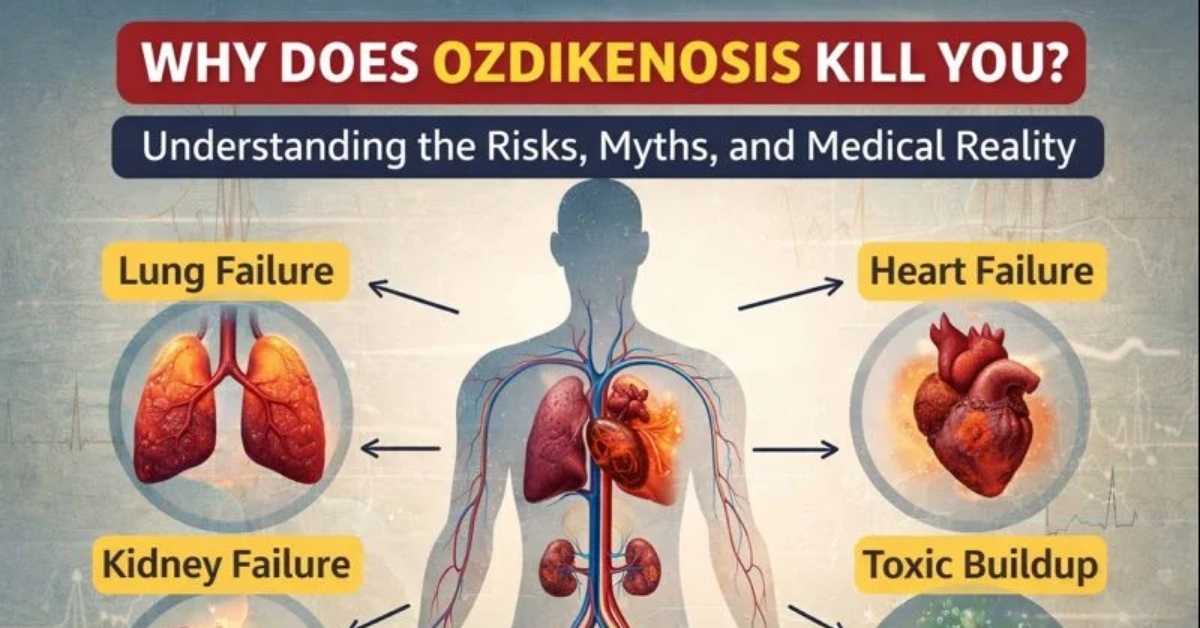
Many articles claim ozdikenosis leads to the gradual shutdown of vital organs such as the heart, lungs, liver, and kidneys. This narrative mirrors real medical emergencies like sepsis or advanced autoimmune disease, making it feel plausible.
Mitochondrial or Cellular Energy Failure
Another popular explanation involves mitochondrial dysfunction — the idea that cells lose the ability to produce energy, leading to systemic failure. While mitochondrial disorders do exist, there is no evidence linking this mechanism to ozdikenosis.
Immune System Overreaction
Some sources describe an immune overreaction similar to a cytokine storm, where the body damages itself. This explanation is frequently used in misinformation because it’s complex and difficult for non-experts to verify.
Rapid and Irreversible Progression
A recurring claim is that ozdikenosis progresses silently, with few early symptoms, becoming fatal before treatment is possible. This “silent killer” framing is common in fear-based health myths.
Are There Real Diseases Similar to Ozdikenosis?
While ozdikenosis itself lacks medical legitimacy, some real conditions share overlapping terminology. This comparison often confuses readers.
Real Conditions With Similar Mechanisms
| Real Condition | Verified Mechanism | Key Difference |
| Sepsis | Infection-induced multi-organ failure | Clinically documented |
| Mitochondrial disorders | Genetic energy-production defects | Diagnosable and rare |
| Autoimmune diseases | Immune system attacks body | Clear biomarkers |
Key Differences Between Real Diseases and Ozdikenosis
Real diseases have:
- Diagnostic criteria
- Case studies
- Treatment protocols
- Peer-reviewed research
Ozdikenosis has none of these.
Is There Any Scientific Evidence That Ozdikenosis Exists?
This section provides the clearest answer.
Lack of Clinical Trials or Case Studies
There are zero documented patients diagnosed with ozdikenosis in medical literature. No hospitals, universities, or research institutions have published findings.
Absence From Medical Databases
Diseases are officially recognized only after validation. The complete absence of ozdikenosis from global databases strongly indicates it is a fabricated or misunderstood term.
Medical Consensus
Medical professionals rely on evidence, not viral repetition. The consensus is straightforward:
There is no scientific evidence that ozdikenosis exists or causes death.
How Health Misinformation Like Ozdikenosis Spreads Online
Understanding this helps prevent future confusion.
AI-Generated and Recycled Content
Many articles about ozdikenosis are:
- Rewritten versions of each other
- Generated using AI tools
- Published without fact-checking
This creates an illusion of authority through volume.
Confirmation Bias and Search Behavior
When users search “why does ozdikenosis kill you”, search engines display similar articles, reinforcing belief through repetition rather than accuracy.
Risks of Believing Unverified Medical Claims
Belief in fake diseases can cause:
- Unnecessary anxiety
- Delayed diagnosis of real conditions
- Distrust in healthcare professionals
Should You Be Worried If You Read About Ozdikenosis?
The short answer is no — but awareness matters.
No Evidence of a Real Fatal Disease
There is no proof that ozdikenosis causes illness or death. The fear comes from misinformation, not medicine.
Symptoms That Actually Matter
If you experience serious symptoms like persistent pain, breathing difficulty, unexplained weight loss, or neurological changes, consult a licensed medical professional — not the internet.
READ MORE >>> Drivingmadio Do a Barrel Roll 2 Times – Meaning, Trick & Guide
What To Do If You’re Experiencing Serious Symptoms
- Avoid self-diagnosis
- Seek professional medical evaluation
- Use trusted sources like hospitals and government health agencies
Real health issues deserve real medical care.
Frequently Asked Questions
Why does ozdikenosis kill you according to the internet?
Because online content often exaggerates or fabricates explanations using scientific-sounding language.
Is ozdikenosis real or fake?
There is no evidence it is a real medical condition.
Are there confirmed deaths from ozdikenosis?
No confirmed cases exist.
Can ozdikenosis be treated?
There is no treatment because it is not a recognized disease.
Why do fake diseases spread online?
They exploit fear, curiosity, and algorithm-driven content sharing.
Final Verdict — Why the Idea That Ozdikenosis Kills You Exists
The belief that ozdikenosis is fatal exists due to:
- Fear-based content marketing
- Pseudo-medical terminology
- Repetition across low-authority websites
- Lack of critical evaluation
Ozdikenosis is not a proven disease. The fatal explanations surrounding it are speculative and unsupported by science. The best defense against such misinformation is critical thinking, verified sources, and medical expertise.
In a world flooded with information, truth requires discernment. Always question what you read — especially when it concerns your health.